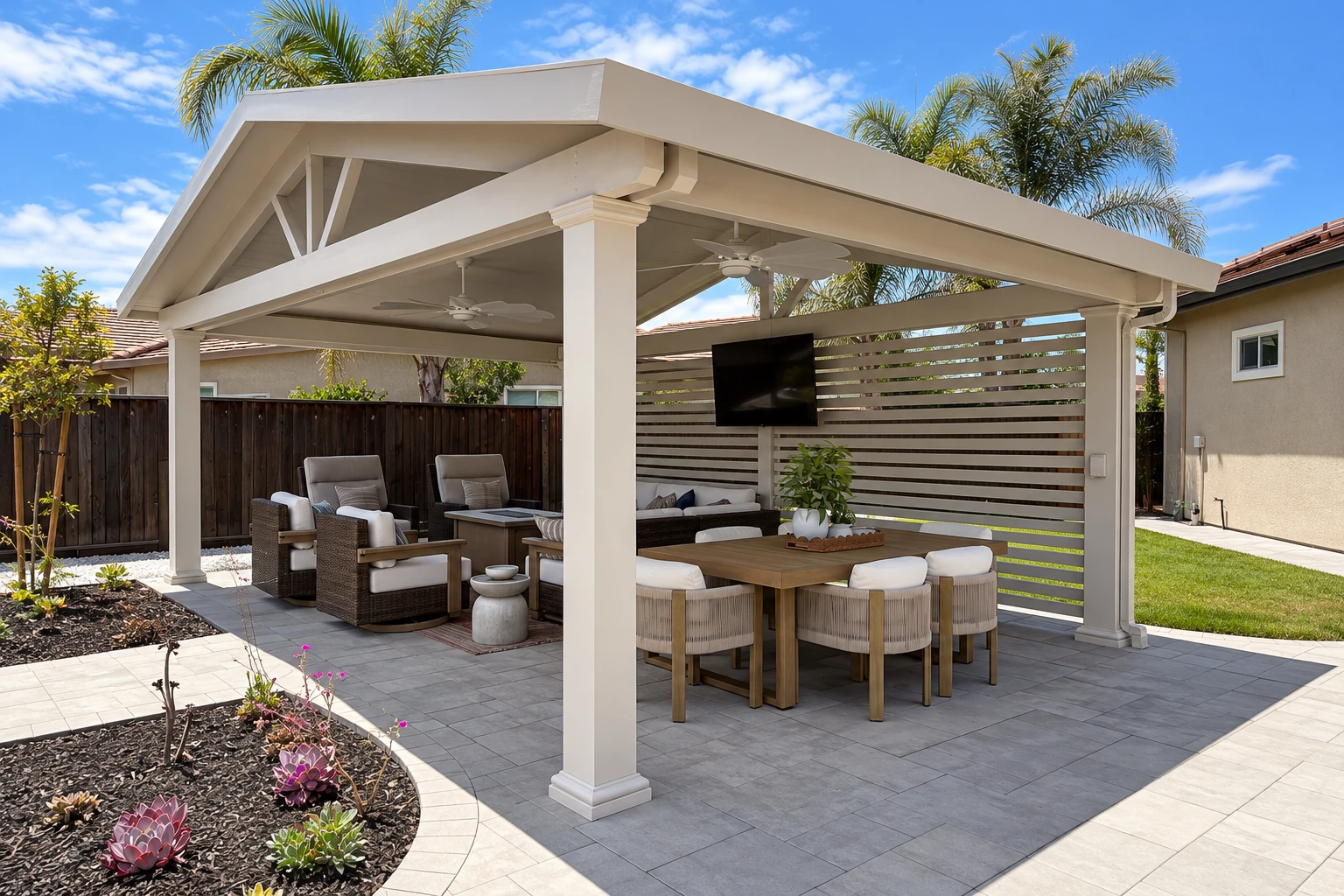
Walkway construction in Springfield IL - a path wide enough to actually use
Tired of a muddy shortcut across the lawn or a walk nobody uses? We build paths sized to how your household really moves.
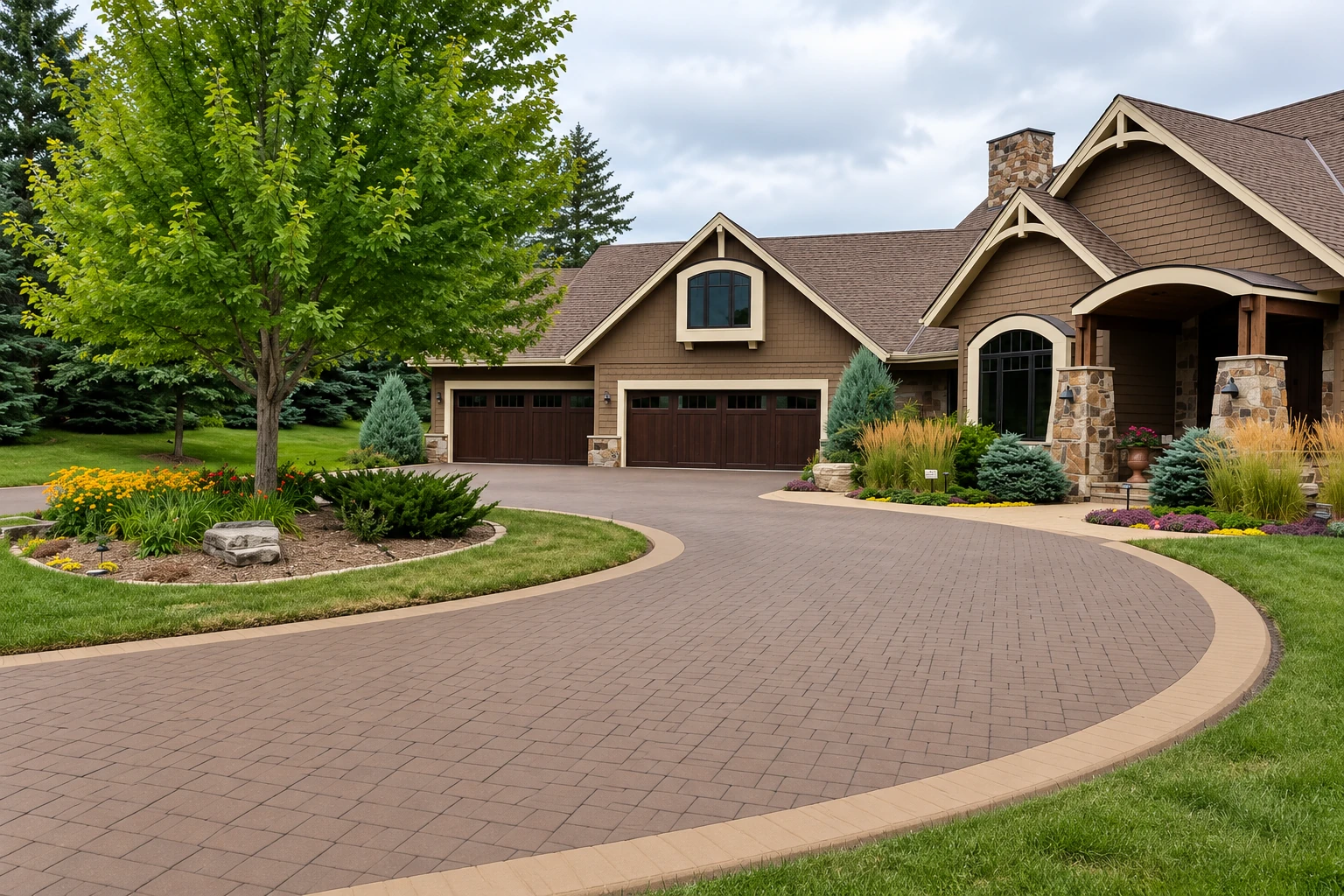
What does it take to build a walkway that gets used?
Walkway construction in Springfield, IL means building a path through your yard in brick, stone, gravel or mulch, wide enough for the people who use it and with steps where the ground drops, so nobody cuts across wet grass to reach the door.
Most people call when there's a dirt track worn across the lawn, or an old walk that's too narrow or sunk at one end. We're based in Springfield and work in the cities around it. The price comes down mostly to length, material and how far the ground drops, since steps take more work than a flat run. The schedule depends on the weather and on whether the work reaches the public sidewalk, because that can bring the city into it. If the yard falls off hard beside the path, it may need a retaining wall too, and I'll tell you plainly when it doesn't. The estimate puts your own number in writing.
How we handle walkway construction, start to finish
I start every walk with two questions. Who uses this path, and what gets wheeled down it? A trash can, a mower and a garden cart each need a different width, and a walk that's too narrow or has one odd step gets walked around instead of on, so we set the width and any steps to fit before anything else. Then our crew digs out the line, packs a firm base and lays the brick, stone or gravel. Loose material like gravel or mulch wanders into the lawn without edging, so we set edging along it. We also give the surface a very slight pitch to one side so rain runs off instead of sitting on it.
A walk usually ties into something else in the yard. Where it runs past a garden bed or along the property line, a low wall from our brick wall installation work can frame it. Our stone masonry covers stone steps and borders that match a stone house or foundation.
Walkways, steps and city rules in Springfield
Springfield's Office of Public Works issues excavation permits for digging anywhere in the city's public right-of-way, the public strip along your street where the sidewalk sits. Its list names streets, alleys and sidewalks. It doesn't name walkways, so the list alone doesn't settle whether a walk that stays in your yard needs a permit. If your new walk ties into the public sidewalk, that part is right-of-way work. We check with the city or village office for your address before we start, and if your job needs a permit, we take care of the paperwork.
Ground frost in central Illinois averages about six inches thick by the end of January. That's an average, not a forecast for any one winter. Ground that freezes and thaws pushes on anything sitting on soft soil, which is why so many older front walks around here have sunk or tipped next to the steps. So we dig past the topsoil and pack the base firm before any brick or stone goes down. We see the same winters on jobs in Chatham and Decatur.
How walkway construction works
Call or send us the form
Call (217) 210-0722 or use the form and tell us where the path goes and who uses it. We'll set a time for me to come look.
I walk the yard with you
I come out myself, look at the ground, the slope and where the walk starts and ends, and tell you what I see. You get a written estimate with the width, material and steps spelled out, so you know the price before anything starts.
We check, schedule and build
Once you say go, we check what your city or village asks for and set a date. A wet stretch can push it back, because we don't pack a base in mud.
Walk the finished path together
When it's done, we walk it with you before we pack up. Try it with the cart or the mower while we're still there.
Get a written price for your walkway, steps and edging
We reply to every form within one business day. I come out myself to look at your yard and write up a free on-site estimate, and there's no obligation to go ahead.
Questions before you build a walkway
How wide should a walkway be?
A garden extension guide puts the minimum at three feet for a path one person uses, and five to six feet for two adults side by side, children or a large garden cart. Plan the width around whoever uses it most, because a family with a cart needs far more room than one walker.
What is the best way to handle a slope on a garden path?
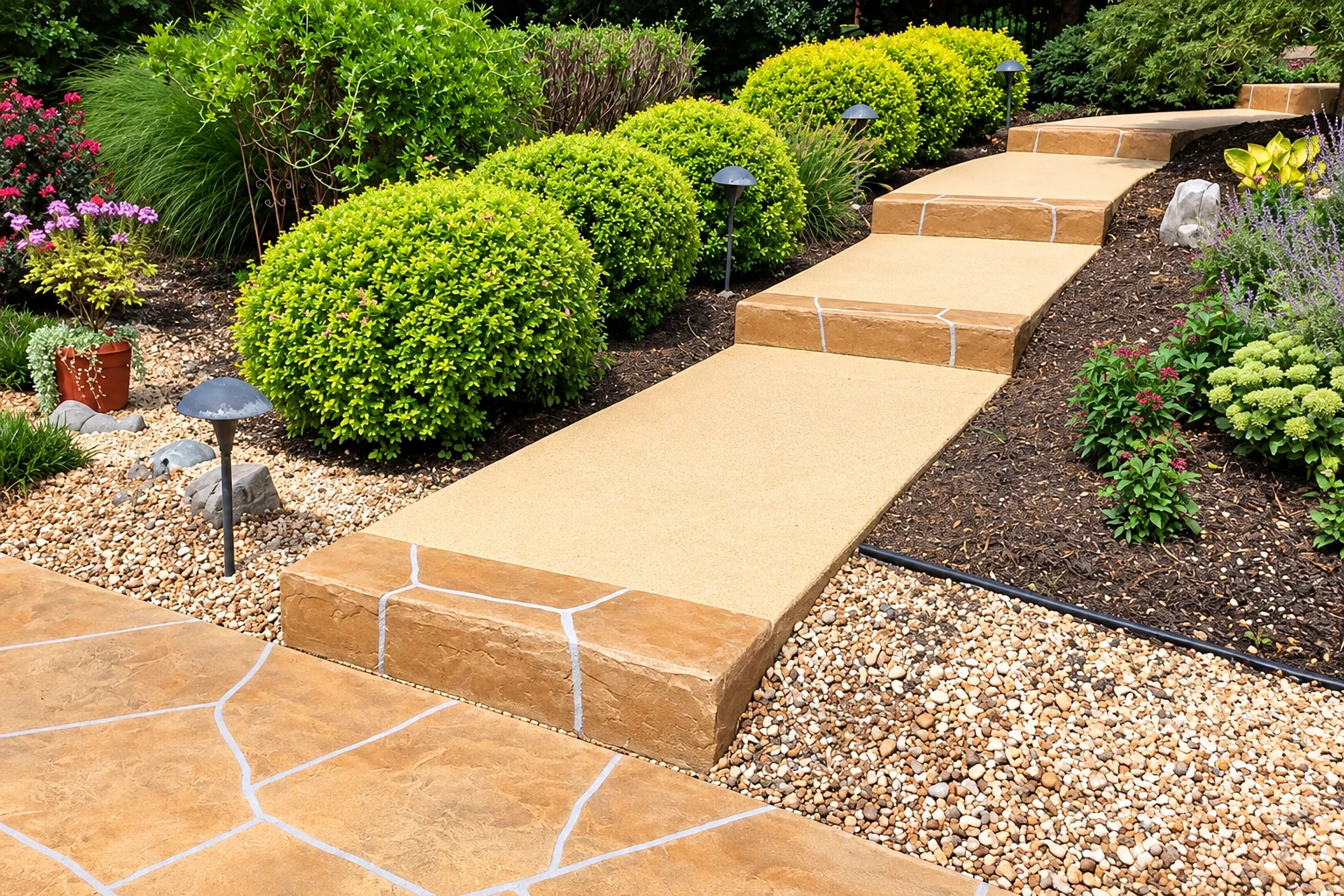
Use at least two steps rather than one, since the same extension guide notes a single step is hard to negotiate. Where the ground changes height, group the steps together in one spot so the rest of the path stays easy to walk.
How much does it cost to build a walkway in Springfield, IL?
I can't give you an honest number until I've seen the yard, because the price depends on the length, the width, the material and how much the ground drops. Gravel with edging usually costs less to put in than brick or stone, and a run of steps or a tie-in to the public sidewalk adds work. Call (217) 210-0722 and I'll come price yours.
What does Springfield require for walkway work in the public right-of-way?
The city requires all public sidewalk to meet the Illinois Accessibility Code, and Public Works inspects the sidewalk after it's finished when they're called out. So the piece where your walk meets the sidewalk has to be built to that code.
How do I take care of a new walkway in its first winter?
Keep salt off a new walk soon after it's built, and use chloride deicing salts only when you need them for safety, a concrete research center advises. Shovel it as your first step, and save the salt for real ice.
What kind of brick holds up best for a walkway in central Illinois?
Ask whether the brick is rated for cold or moisture, because that helps keep it from cracking over time. It matters more on a walk than on a wall, since a walk sits in water and goes through freeze and thaw all winter.
Why Springfield homeowners call Artisan Springfield Concrete and Masonry for a new walk
I come out and price it
I look at every job and write the estimate myself, then work right alongside our crew when we build it. The person who measured your walk is the one standing on it while it goes in.
Running our own jobs since 2013
I learned brick under an older mason, left the trade for close to ten years and came back to start this business in 2013. Thirteen years in, I'd still rather tell you a walk can wait than sell you one your yard doesn't need.
Licensed and insured on your property
We're licensed and insured. That matters when a crew is digging, hauling stone and running a compactor in your yard.
Utilities cleared before we dig
When work reaches the public right-of-way, the city requires every public and private utility to be notified and cleared first through the Illinois One Call JULIE system, so that call gets made before anyone digs there. A cut line costs far more than a day's wait.
On a walkway, the width and the steps decide whether it gets used, so that's where I start. Tell us about your yard and I'll come take a look.
Work that often goes with a new walk
Brick wall installation
A low brick wall along the walk can hold back a planting bed, mark the edge of the yard and tie the new path to the brick on your house.
Stone masonry
Natural stone suits steps where the path changes height, a border that holds gravel in place, or a seat wall at the spot where the walk turns.
Plan your walkway and steps with us
Call (217) 210-0722 or send the form with the path's rough length, who uses it and whether it meets the public sidewalk, so I come out already thinking about your yard.